

Industrial and commercial floors experience nonstop pressure every day. Heavy forklifts, machinery, rolling pallets, chemical spills, and constant foot traffic can quickly damage ordinary concrete surfaces. High Traffic Flooring, is designed to withstand these demanding conditions while improving safety, durability, and operational efficiency.
Choosing the right flooring system is essential for facilities that operate around the clock. A durable resinous flooring system not only protects concrete but also reduces maintenance costs and downtime. From industrial epoxy flooring to advanced resin coatings and urethane cement systems, every option offers specific benefits depending on the working environment.
This guide explains the best flooring systems for high-traffic facilities and how to choose the right solution for long-term performance.
Why High-Traffic Facilities Need Specialized Flooring
Concrete floors in industrial environments face constant wear and tear. Without proper protection, the surface can crack, chip, absorb moisture, and create unsafe working conditions.
High-performance flooring systems help prevent surface cracking, spalling, dust buildup, chemical corrosion, and safety hazards. Modern resinous flooring systems are engineered to handle heavy operational demands while maintaining a clean and professional appearance.
Industrial Epoxy Flooring for Heavy-Duty Performance
Industrial epoxy flooring is one of the most popular choices for warehouses, manufacturing plants, and logistics centers. This flooring system combines epoxy resin and hardeners to create a durable protective surface over prepared concrete.
Epoxy flooring is known for its exceptional compressive strength and resistance to heavy rolling loads. Facilities with continuous forklift movement often choose epoxy because it can handle intense daily traffic without wearing down quickly.
Benefits of Industrial Epoxy Flooring
Strong Load-Bearing Capacity
Epoxy flooring supports heavy equipment, pallet jacks, and forklift traffic without surface failure.
Abrasion Resistance
The durable finish resists scratches, impact damage, and daily operational stress.
Easy Maintenance
Its seamless surface makes cleaning easier and reduces dust accumulation.
Long-Term Cost Savings
When installed correctly, epoxy flooring can last for years with minimal maintenance requirements.
Proper surface preparation is critical for successful epoxy installation. Mechanical grinding and concrete profiling help create a strong bond between the coating and the substrate, improving durability and preventing peeling.
Advanced Resin Flooring Systems
Advanced resin flooring includes specialized systems such as polyaspartic coatings, urethane coatings, and methyl methacrylate (MMA) flooring. These systems are designed for environments requiring faster installation times or enhanced chemical resistance.
Many facilities choose resin flooring systems because they minimize downtime and offer flexible performance options.
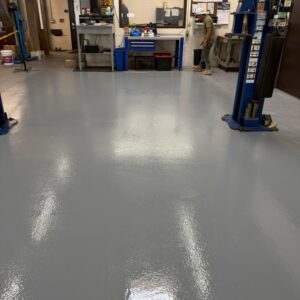
Advantages of Resin Flooring
Fast Cure Times
Some advanced resin systems cure within a few hours, allowing facilities to return to operation quickly.
Chemical Resistance
These floors protect against oils, solvents, and industrial cleaning chemicals.
Slip Resistance Options
Special aggregate materials can be added to improve traction and workplace safety.
UV Stability
Certain resin systems resist yellowing and maintain their appearance in sunlight-exposed areas.
Businesses operating 24/7 often prefer advanced resin flooring because of its rapid installation and durability under demanding conditions.
Urethane Cement Flooring for Extreme Environments
Urethane cement flooring is considered one of the toughest industrial flooring systems available today. It combines cement-based materials with polyurethane technology to create a highly durable and moisture-resistant surface.
This flooring system is commonly used in food processing facilities, commercial kitchens, pharmaceutical plants, and chemical manufacturing areas.
Key Benefits of Urethane Cement Flooring
Thermal Shock Resistance
Urethane cement can handle rapid temperature changes without cracking or delaminating. This makes it ideal for facilities using steam cleaning or hot water washdowns.
Moisture Tolerance
The system performs well in wet environments and areas with high moisture vapor transmission.
Impact Resistance
Heavy equipment and dropped tools cause less damage compared to traditional flooring systems.
Hygienic Surface
The seamless finish helps maintain sanitary conditions in food and beverage facilities.
Many businesses looking for Industrial high traffic flooring choose urethane cement because of its unmatched durability in harsh operating conditions.
Choosing the Right Flooring System
Selecting the right flooring depends on several important factors, including traffic levels, environmental conditions, and operational requirements.
Choose Epoxy Flooring If:
Your facility handles heavy forklift traffic and requires strong abrasion resistance with long-term durability.
Choose Advanced Resin Flooring If:
Downtime must be minimized and your facility needs fast-curing flooring with UV resistance and chemical protection.
Choose Urethane Cement If:
Your facility experiences thermal shock, constant moisture exposure, or operates in food processing and chemical production environments.
Working with experienced flooring contractors helps ensure the system matches your facility’s exact operational needs.
Importance of Professional Installation
Even the best flooring products can fail if installation is not done correctly. Professional contractors evaluate the condition of the concrete, moisture levels, and traffic patterns before selecting the appropriate system.
Proper installation includes mechanical concrete preparation, moisture testing, crack repair, correct coating thickness, and controlled curing procedures. A professionally installed flooring system provides better adhesion, improved durability, and longer service life.
Conclusion
High traffic flooring systems play a critical role in protecting industrial and commercial facilities from constant wear and operational damage. Whether you choose industrial epoxy flooring, advanced resin systems, or urethane cement flooring, selecting the right solution improves safety, durability, and long-term performance.
Epoxy flooring offers excellent strength for warehouses and manufacturing plants. Advanced resin systems provide flexibility and rapid return-to-service capabilities. Urethane cement delivers superior protection in extreme environments with moisture, chemicals, and thermal shock.
Investing in the right flooring system helps businesses reduce maintenance costs, improve workplace safety, and maintain efficient operations for years to come.
FAQs
Which flooring system is best for heavy forklift traffic?
Industrial epoxy flooring is one of the best choices for facilities with constant forklift traffic because of its high compressive strength and abrasion resistance.
How long does industrial flooring installation take?
Installation time depends on the flooring system and facility size. Some advanced resin systems can cure within hours, while epoxy and urethane cement systems may require additional curing time.
Is urethane cement better than epoxy flooring?
Urethane cement performs better in environments with extreme temperature changes, moisture exposure, and chemical washdowns, while epoxy flooring is ideal for heavy-duty warehouse and manufacturing applications.