
If you own a pool in Las Vegas, you already know the desert doesn’t play nice with anything — including the gear keeping your water clean. pool cleaning las vegas The heat here is brutal, the sun runs UV at levels most equipment wasn’t originally tested for, and dust from the valley works its way into every exposed component. Pool maintenance in Vegas isn’t the same job it is in Ohio or Florida. The stakes are higher, the wear happens faster, and skipping a service call in July can mean a $2,000 repair bill by August.
So what actually needs attention — and how often?
The Pool Pump: Your System’s Heart (And First to Fail)
The pump is where most pool problems start. It runs constantly, sometimes 8–12 hours a day during summer, and in Las Vegas that summer stretches from April through October. That’s a long season.
What you’re watching for:
The pump basket collects debris before it reaches the impeller. In Vegas, that means cottonwood seeds in spring, fine dust year-round, and the occasional palm fiber or bug surge after a monsoon. A clogged basket doesn’t just reduce flow — it makes the motor work harder, which shortens its life noticeably. I’d recommend checking it twice a week during heavy-use months, not once a week like the standard advice says.
The motor itself needs its vents kept clear. Desert dust clogs those cooling vents, and when a motor runs hot in 110°F ambient temps, the bearings go first. You’ll hear it — a grinding or high-pitched whine that wasn’t there before. Don’t wait to call someone when that starts.
Seal replacement is something most homeowners skip until there’s a leak. Don’t. A worn shaft seal costs maybe $30 to replace. A motor housing that’s been soaked with water costs ten times that.
Pool Filter: The One Piece People Under-Maintain
Three filter types show up in Las Vegas pools — sand, cartridge, and DE (diatomaceous earth). Each one needs different care.
Sand filters need backwashing. That’s it, mostly. But here’s the thing most service techs won’t tell you upfront: the sand itself should be replaced every 5–7 years. Old sand gets channeled — water finds paths through it instead of filtering through it — and your water clarity drops for no obvious reason. If your pool looks slightly hazy despite balanced chemistry, this is the first thing to check.
Cartridge filters are popular in newer Vegas builds because they don’t need backwashing, which saves water. A real advantage in a city where water conservation actually matters. The cartridges should be hosed down every 4–6 weeks during heavy use, and soaked in filter cleaner twice a year to pull out the oils and sunscreen residue that hosing alone won’t budge. Expect to replace the cartridge every 2–3 years — sooner if you run the pool heavily.
DE filters give you the cleanest water of the three. They also require more precision. The DE powder needs to be recharged after every backwash, and the grids inside need to be pulled and inspected at least once a year. A torn grid sends DE into your pool. Not dangerous, but cloudy white water that won’t clear is an annoying problem with an easy cause.
Pool Heater: Easy to Ignore, Expensive to Replace
Not every Las Vegas pool has a heater — but the ones that do often get neglected because the equipment lives on the side of the house where nobody looks. Out of sight, out of mind.
Gas heaters should be inspected annually, full stop. A qualified tech needs to check the burner tray for corrosion, verify the heat exchanger isn’t cracked (that’s a carbon monoxide issue, not just a performance issue), and confirm the bypass valve and pressure switches are working. In Vegas, we don’t use heaters for 5–6 months out of the year. Sitting idle that long while exposed to heat and dust creates its own corrosion problems.
Heat pumps are more common now and more efficient in Vegas’s climate since they pull heat from air that’s already warm. They need their evaporator coil fins cleaned once a year — they collect dust and lose efficiency fast. The refrigerant level should be checked every 2–3 years.
One honest take: if your heater is more than 10 years old and starts having ignition issues or inconsistent heating, repair costs can climb fast. Sometimes replacement is the smarter math.

Pool Cleaner: The Robot or Suction Unit That Does the Dirty Work
Automatic pool cleaners take a beating. They’re underwater, moving constantly, running over rough plaster.
Robotic cleaners need their filter baskets emptied after every use — yes, every single use. The tracks and brushes wear down over 2–3 seasons of regular use and should be inspected annually. The power supply cord is usually the first failure point; look for fraying where it enters the unit.
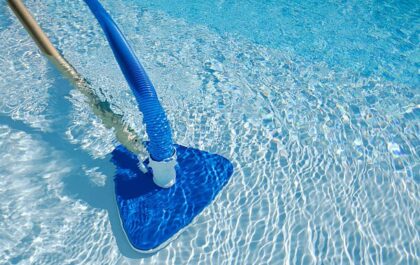
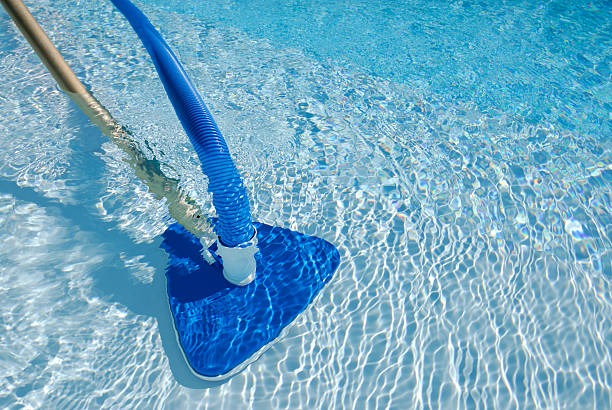
Suction-side cleaners (the Polaris or Kreepy Krauly type) depend entirely on your pump and filter being in good shape. Their hoses crack in Las Vegas sun faster than anywhere else — UV degradation is real, and a cracked hose loses suction immediately. Check the hose for soft spots or cracks twice a season.
Pool Heater, Pump, and Chemical Feeder — The Automation Systems
If you have an automated control system — Pentair EasyTouch, Hayward OmniLogic, Jandy iAqualink — those panels need their own attention. The outdoor control boards are sealed but not immune to heat damage. Any error codes showing up repeatedly aren’t things to dismiss; they’re usually an early warning that a component is close to failing.
Salt chlorine generators deserve their own paragraph. In Las Vegas, they’ve become popular because they reduce how much you’re buying and handling liquid chlorine. But the salt cell — the actual electrode that produces chlorine — calcifies with mineral deposits because Vegas water is hard. Very hard. You need to inspect the cell every 3 months and clean it with a diluted acid wash when scaling builds up. Skipping this doesn’t just reduce chlorine output; it can destroy the cell entirely. A replacement cell runs $400–$700 depending on the brand.
Water Chemistry Equipment: The Stuff Nobody Thinks About Until It Breaks
Your chemical feeders, test equipment, and controller probes need maintenance too.
Chemical automation controllers (if you have one) use ORP and pH probes submerged in the water. Those probes drift over time. They need to be recalibrated every 30–60 days and replaced every 12–18 months. A controller giving you bad readings is worse than no controller — it’ll under- or over-dose chemicals without you realizing it.
Manual testing is still worth doing even if you have automation. Pick up a good liquid test kit — not just test strips — and check your water every week in summer. Strip tests are fast but not precise enough for a pool running hard in 110°F heat.
Pool Deck and Equipment Pad: Often Overlooked, Actually Matters
The concrete equipment pad your pump and filter sit on should be level and clean. Standing water around pool equipment corrodes fittings and motor bases faster than almost anything else. In Vegas we don’t get a lot of rain, but when we do — especially during monsoon season — it matters.
Check that your equipment pad drains properly. Make sure the conduit and electrical connections feeding the equipment are sealed and in good shape. And if you have a gas heater, check the gas line connections at least once a year for any sign of corrosion at the fittings.
How Often Should You Have Your Las Vegas Pool Serviced?
Weekly service is the standard for most residential pools in the valley, and for good reason. Between dust, heat, and high bather loads during summer, a Vegas pool can go from clean to algae-cloudy in 4–5 days without attention.
A good service contract covers chemical balancing, basket emptying, and brushing. But it should also include a filter clean every 4–6 weeks and a seasonal equipment inspection — twice a year, minimum. If your current pool service only handles chemicals and skimming, you may be missing the maintenance that actually prevents the big repair bills.
The equipment failures that cost the most — burned-out motors, cracked heat exchangers, dead salt cells — almost always have warning signs that a proper inspection catches early. The cost difference between fixing a $40 seal before it fails versus a $600 motor replacement after it does is not subtle.
Your pool equipment will last longer than the industry average in Las Vegas if you stay on top of it. But you have to actually stay on top of it.