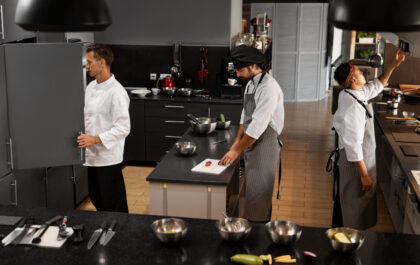

Choosing a flooring contractor for a commercial food facility isn’t like picking someone to resurface a warehouse. The stakes are dramatically higher. Your floor must satisfy USDA and FDA compliance requirements, survive conditions that destroy standard materials within months, and maintain a seamless, sanitary surface through years of punishing daily use. Get the contractor wrong and you’re looking at premature failure, costly repairs, and potential compliance violations that shut down your operation.
High Performance Systems has served as certified industrial flooring contractors since 1988, bringing over three decades of specialized experience to commercial and industrial facilities across New Jersey, New York, and Pennsylvania.
What Should You Look for in a Commercial Flooring Contractor?
Experience in food environments specifically is the most important qualifier. A contractor with general industrial experience may not understand the unique combination of thermal shock resistance, organic acid exposure, and antimicrobial requirements that food facilities demand. Ask directly whether they have a documented history of USDA and FDA compliant installations.
A qualified urethane concrete contractor will also discuss surface preparation in detail before ever mentioning materials. Proper prep is where most flooring failures originate, and experienced contractors know this better than anyone.
Why Does Surface Preparation Matter So Much?
Urethane concrete and epoxy systems bond to the substrate beneath them. If that substrate is contaminated with oil, loose particles, moisture, or previous coating residue, the bond fails. It might not fail immediately, but it will fail, usually at the worst possible moment during a busy production week.
High Performance Systems uses thermal-cured resin systems that create a tighter bond once the substrate is correctly prepared. This approach produces superior adhesion compared to off-the-shelf moisture-cure products, which rely on ambient humidity and are far more susceptible to inconsistent results. That tighter bond translates directly into a floor that survives heavy forklift traffic and aggressive daily washdowns without delaminating.
What Is Urethane Concrete and Why Does It Dominate Food Facilities?
Urethane concrete, also known as urethane cement or cementitious urethane, combines the structural toughness of concrete with the flexibility and chemical resistance of urethane resin. The result is a floor that handles conditions that would destroy either material alone. It withstands thermal shock up to 250°F, resists the organic acids found in meat, dairy, and produce processing, and tolerates heavy mechanical traffic without cracking.
For commercial kitchens, processing plants, breweries, and bottling operations, this combination of properties makes urethane concrete the clear technical choice over standard epoxy or bare concrete.
How Does This Relate to Passing USDA and FDA Inspections?
Regulatory inspectors from the USDA and FDA look for specific floor characteristics when evaluating food facilities. The floor must be seamless, non-porous, resistant to the cleaning chemicals used in the facility, and free of any surface features that could harbor pathogens. Proper food service flooring installed by a certified contractor satisfies every one of these requirements by design, not by accident.
Facilities that skip proper installation in favor of cheaper alternatives consistently face inspection issues that more than offset the initial savings. A single production shutdown costs far more than the price difference between a quality floor and a budget one.
Real-World Scenario: Meat Processing Plant Floor Failure
Consider a mid-sized meat processing facility that installed a standard epoxy coating to reduce upfront costs. Within 18 months, the organic acids from daily operations had begun attacking the coating surface, creating micro-pits where bacteria accumulated. Hot water washdowns caused thermal cracking near drain perimeters. A routine USDA inspection flagged multiple floor violations, requiring an emergency remediation that cost twice what a proper installation would have. The facility also lost several days of production during the repair.

This outcome is preventable. Working with a certified urethane concrete contractor from the start eliminates this exact failure mode.
What Areas of a Food Facility Need Special Flooring Attention?
Every zone has different stress profiles and deserves individual engineering consideration. Production floors bear the brunt of chemical exposure and mechanical traffic. Drain perimeters are the most vulnerable areas for thermal cracking and must be properly reinforced. Walk-in coolers and cold storage areas need systems that perform at freezing temperatures without cracking or losing adhesion. Loading docks experience impact stress from pallet jacks and foot traffic. A skilled contractor addresses each zone differently.
Serving NJ, NY, and PA Since 1988
High Performance Systems exclusively serves the commercial and industrial marketplace, with no residential services offered. Their geographic focus across New Jersey, New York, and Pennsylvania means they understand the specific regulatory environment, climate conditions, and facility types common to this region. That localized expertise matters when you need a contractor who knows the terrain as well as the materials.
Proper food and beverage flooring isn’t a commodity purchase. It’s an engineering decision with long-term operational consequences. Choose the contractor accordingly.
FAQs
How long does urethane concrete flooring last in a food processing facility? When properly installed by a certified contractor with correct surface preparation, urethane concrete flooring can last for many years, even decades, under heavy industrial use in food processing environments.
What is the difference between urethane concrete and cementitious urethane? They are the same product. Urethane concrete, also called cementitious urethane or urethane cement, combines the structural properties of concrete with the flexibility and chemical resistance of urethane resin.
Can High Performance Systems handle large-scale food processing plant installations? Yes. High Performance Systems has the experience and capacity to handle large-scale commercial and industrial flooring projects across NJ, NY, and PA, from commissary kitchens to major processing facilities.